All Watched Over by Machines of Loving Grace
Project
MA Games Development & Research: Literary and Filmic Adaptation Practical: Johnny Mnemonic
Project Duration
2.5 weeks
As part of the Games Development and Research Program, the Adaptation lecture and practical series asks participants to build a game as a group of 4-6 people. The game should adapt a specific piece of literature, whether those ties are only thematic, or describes through the gameplay, or the game’s writing is up to the team to decide.
Titled after the Adam Curtis documentary film, and poem by Richard Brautigan, ‘All Watched Over’ takes place in dystopian-type future where machines have become part of the cybernetic landscape, and society lapses into a liminal state of ever-present decay. The game’s conceptualization, themes and visual design closely follows these works, and character dialogue reminiscent of the theater play “Waiting for Godot” and cyberpunk novel Johnny Mnemonic features in this somber and engrossing story of a once utopian world gone wrong.
I provided support on the side of the game’s writing, sound design and prop modeling, setting the tone for the style of art and the visual world we would create together on this journey. Research was done through the Adam Curtis Documentary of the same name, as well as the poem by Richard Brautigan, from which some lines of text we adapted into in-game scenery. From these two pieces, we lifted the general themes of alienation and irrational trust in computers and machines to save humanity from itself.
I like to think (and
the sooner the better!)
of a cybernetic meadow
where mammals and computers
live together in mutually
programming harmony
like pure water
touching clear sky.
I like to think
(right now, please!)
of a cybernetic forest
filled with pines and electronics
where deer stroll peacefully
past computers
as if they were flowers
with spinning blossoms.
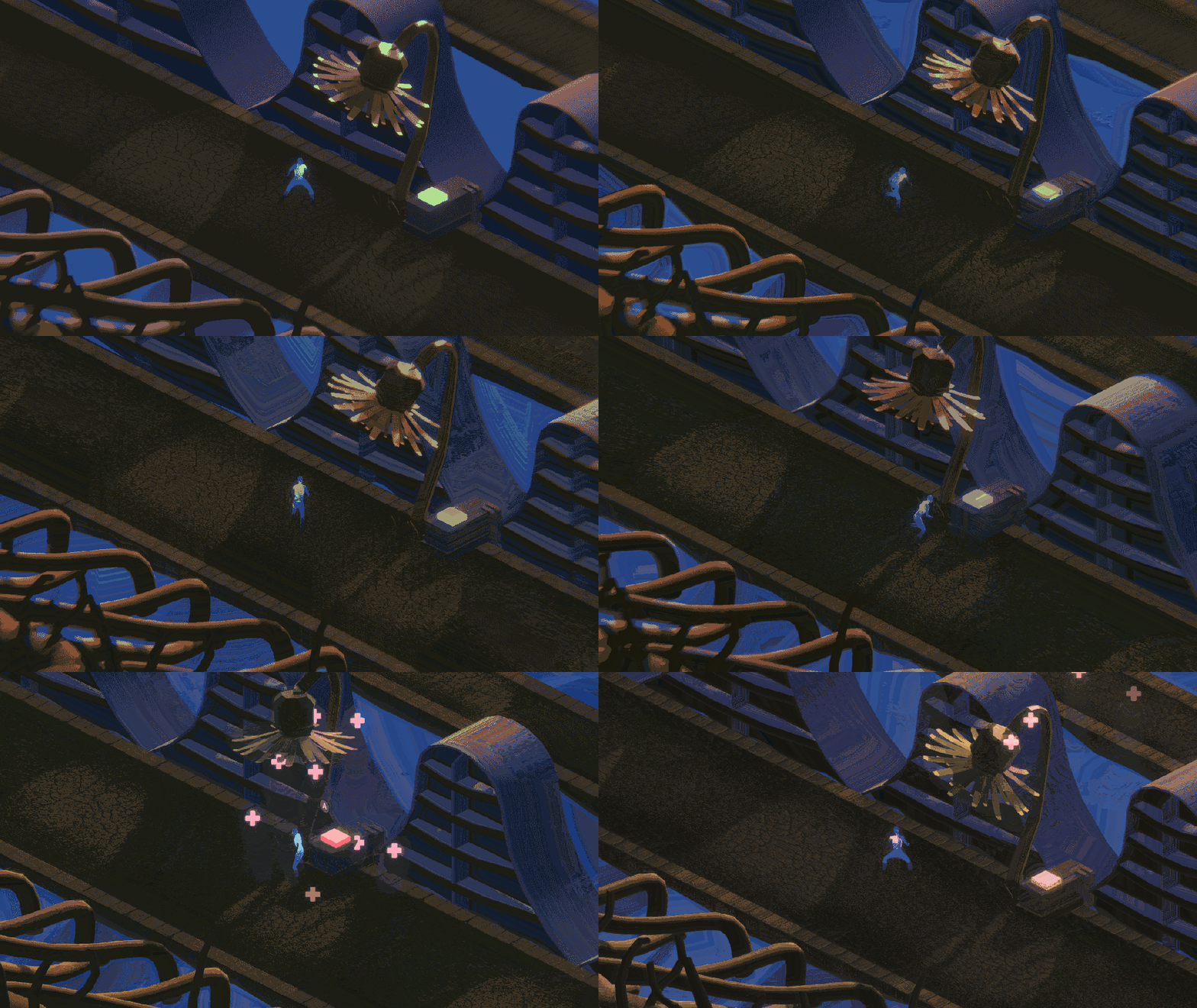
Lending this idea of cybernetic “flowers with spinning blossoms” from Brautigan’s text, we designed a mechanic where players may ‘heal’ their total potential health pool. These flowers, the ones still living at least, are a source of player vitality, combating the ‘syndrome’ which worsens as the player takes excess damage in combat gameplay. Players feeling heavily affected by the syndrome will notice status changes, such as running speed, vision reduction, and a new, more alienating soundscape.
The main text of this adaptation project was William Gibson’s “Johnny Mnemonic,” a cyberpunk novel adapted to film by Robert Longo and starring Keanu Reaves, Dolph Lundgren, Dina Meyer, Ice-T, Udo Kier and even Henry Rollins. This novel (and the film) served as the backbone of the cyberpunk world, where ‘runners’ holding data chips inside their heads, securely deliver data from sender to receiver, as the world wide web cannot be trusted to transmit information securely. The style of verbal prose we wanted to create for our characters, also comes from Johnny Mnemonic. From the often curt dialogue, small hints about the state of the world, and the unnamed protagonist’s role are peppered in here and there. Players need only to speak with another NPC to find out more about the world, and their own situation.
Lastly, the theater play, Waiting for Godot, provided inspiration for a small bit of absurdity with the inclusion of Vladimir and Estragon (Didi & Gogo) into the game world. Though instead of Godot, Didi and Gogo are waiting meet Jones, who can supposedly cure our protagonist’s syndrome. Some other characters in the game claim is the cause of their mutual suffering, however, Gogo and Didi seem particularly excited to meet the dolphin, and are happy to wait beneath a dead flower.
 Portfolio - Alex Boccia